

Poverty is an ongoing issue in Canada and those socially marginalized such as the Two-Spirit, Lesbian, Gay, Bisexual, Trans, Queer, plus (2SLGBTQ+) can be considerably more vulnerable to it. A fully national team coordinated out of York University will remedy a critical gap in anti-poverty research and policy.
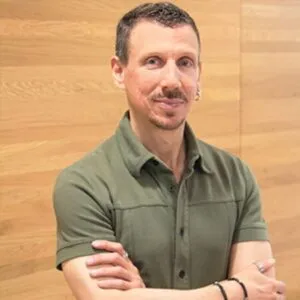 This study is led by Dr. Nick Mulé, Professor in the School of Social Work, the School of Gender, Sexuality and Women’s Studies, and the Faculty of Health at York University and is co-led by Dr. Maryam Dilmaghani, Professor of Economics in the Sobey School of Business at Saint Mary’s University.
The project research team is made up of dozens of multidisciplinary academics at universities throughout Canada and the US and partners with 31 non-profit community-based organizations who work the frontline on 2SLGBTQ+ inclusion and/or poverty reduction across Canada. A Community Advisory Board (CAB) of 2SLGBTQ+ people with lived experience in poverty is supporting the research process.
Over 6 - 7 years, this project will study both the extent and effects of poverty on the 2SLGBTQ+ communities across Canada, and more importantly produce an evidence-based action plan that can assist governmental agencies, non-profits, and private organizations to address poverty therein.
The entire project is structured around what are called Domains Of Poverty:
- Income, Employment and Education,
- Housing,
- Food Security, and
- Health and Social Services Access.
Challenges and Issues to be Addressed
Existing evidence suggests that Two-Spirit, lesbian, gay, bisexual, transgender, and queer plus (2SLGBTQ+) people are both disproportionally affected by poverty and vulnerable to poverty risk. For instance, 52% of 2SLGBTQ+ people were negatively impacted by the COVID-19 pandemic, in income and employment (EGALE 2020).
However, given the unreliability of identifying 2SLGBTQ+ people in most nationally representative datasets, this evidence is gleaned from disparate, small-scale investigations. We seek to determine to what extent and why poverty is impacting 2SLGBTQ+ people. The lack of a national scale study of poverty and income inadequacy among 2SLGBTQ+ people hinders the development of effective policy measures, non-profit service provision, and scholarship.
Goals & Objectives
The goal of the project is to create high impact, evidence-based, and policy-relevant knowledge on the nature, extent, determinants, and consequences of poverty in 2SLGBTQ+ communities in Canada.
- To document the lived experiences of poverty among 2SLGBTQ+ communities to create a unique national-level dataset allowing for an intersectional examination of 2SLGBTQ+ poverty rates, poverty risk, and associated root-causes and consequences.
- To build authentic collaborations between scholars, students, community partners, and 2SLGBTQ+ people with lived experiences of poverty, throughout the research process, for effective societal impact.
- To mobilize poverty knowledge through a 2SLGBTQ+ lens to inform research, policy, funding, and programming within academia, government, and community.
- To develop an evidence-based Action Plan, usable by governmental agencies, non-profits, and private organizations, to address 2SLGBTQ+ poverty in Canada.
Partnership
Grounded in community-based participatory research, a Community Advisory Board of 2SLGBTQ+ people as well as 2SLGBTQ+ peer researchers with experiences of poverty, will inform the entire research process and knowledge mobilization. Their insights will be in the foreground of the researcher's inquiry and methods.
Twenty-seven non-profits focusing on 2SLGBTQ+ inclusion and/or poverty reduction are partners with this project. Three academic partners plus York itself will provide novel training opportunities to students and junior scholars in doing research with the Q community. Ranging from early career researchers to full professors, our scholars bring diverse economic, health, social sciences, and humanities expertise to the team.
Advancing previous work of team members in the Canadian Coalition Against LGBTQ2S+ Poverty, this study is grounded in principles of:
- valuing lived experience and building trust;
- operationalizing decolonization and intersectionality; and
- engaging authentically with diverse communities to address the complexity of 2SLGBTQ+ poverty, from marginalization to resiliency.
The Project’s main website is here.