
 by Della Fougère • Cape Breton • 2026-04-01
A chat with Percy
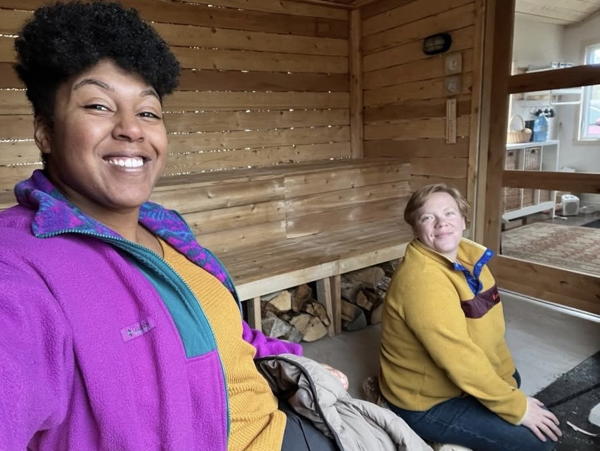
It’s a winter wonderland on Cape Breton Island and Percy begins with introductions: I’m Percy (pronouns she/they) Ager, and Clary Ager (she/her) is my wife. Ager is pronounced “Ager” (like saying “ager” with a British accent). They run a farm called Zucchini Wives in rural Cape Breton.
How did the name “Zucchini Wives” come about?
The name came about because “Gays in the Garden” was already taken. There’s a photo of Clary holding a tray of plant starts, and they just happened to be zucchinis. It was also the same day I ordered her engagement ring, and I had this moment of, “Oh—we’re going to be wives.”
I didn’t initially think about the sexual innuendo of a zucchini (which maybe was an oversight), and that was pointed out to me later. But I do really love zucchinis as a symbol—they’re such a plentiful plant, and when you grow zucchinis, you end up giving it away to your neighbours. That generosity is kind of the sentiment we like to hold when it comes to growing: grow to be generous.
What’s life like on the farm?
Life on the farm is always evolving. We bought the farm almost three years ago, and every year has felt really distinct. The first year was mostly about making the house livable because it was in really rough shape. The second year was our first real year with the garden and preparing the farm to function as a wedding venue. The third summer was our first season actually hosting weddings, and now we’re focused on getting the sauna up and running. In the summer, we offer:
- weddings (small ceremonies to 100+ person events in their barn) nestled in a four-acre wildflower meadow;
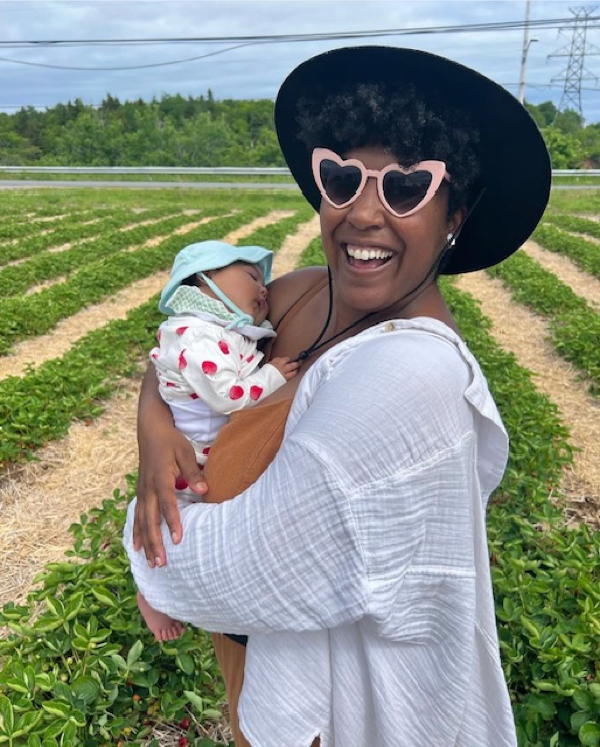
- an 18-bed specialty cutting flower garden;
- bulk flowers for events; and U-pick flower experiences,
- In the winter, we offer Nordic spa experiences -- sauna and cold plunge.
How do you think about growth and long-term timelines for the farm?
There’s always something going on. It’s one of those long-term projects where a lot can be, and already has been, accomplished over time, even though it’s a slow build. We like to think in decade-long timelines rather than year-to-year. Our hope is to eventually work for ourselves full-time, but because we don’t come from money or inherited land, we’ve had to build year-round income. That’s part of why the sauna and winter offerings came into play. Right now, we’re scaling up and growing our businesses, which feels like a new chapter.
Clary is really fond of the saying, “People overestimate what can be done in a year, but underestimate what can be done in a decade.” That’s the scale we try to think about with the farm and what we’re building. I’ve also heard a similar idea called “aggressive patience”—where you keep showing up and working consistently, while also recognizing that meaningful things take a long time. That’s definitely the approach we’re trying to take.
Our hope is to eventually work for ourselves full-time. We’ve recognized that running the farm only in the summer wasn’t going to make that possible, which is another reason we needed to create year-round income streams.
What’s your background, and how does it shape how you run the farm and your businesses?
I’m a biologist by background—that’s what I did my undergrad in—and I took a lot of ecology-focused courses. I really like ecosystem thinking. I think it’s one of the ways to be successful and to work with nature instead of against it.
We try to think about our lives, the farm, and our businesses as an ecosystem—meaning everything has a time where it’s flourishing and a time where it’s resting. That applies both to the business model as an ecosystem, and to the very real ecosystem of the farm itself.
Right now, we’re in a phase of scaling up and getting our businesses busier, which feels like a new chapter.
This approach also informs how we treat the land. The previous use of the property relied on tilling and chemicals. We chose a different path—regenerative practices and embrace nature on the farm.
 How does your queerness influence how you approach your business and community?
Our queerness definitely shapes how we approach our business. We want to be very out and visible—both in our neighbourhood and in Cape Breton more broadly—to help dispel the myth that rural places don’t have queer people, or that rural communities aren’t welcoming. That was a fear we had ourselves.
We also think a lot about inclusion beyond queerness. Clary is a person of colour—a Black woman—and Clary lives with some disabilities, so accessibility and inclusion are things we prioritize very intentionally. We don’t want to treat accessibility and inclusion as something we’ll “get to later” once we’re profitable. We want those values to be foundational from the beginning, not something we add on in the future.
That emphasis on accessibility and inclusion is deeply connected to our own experiences as queer people.
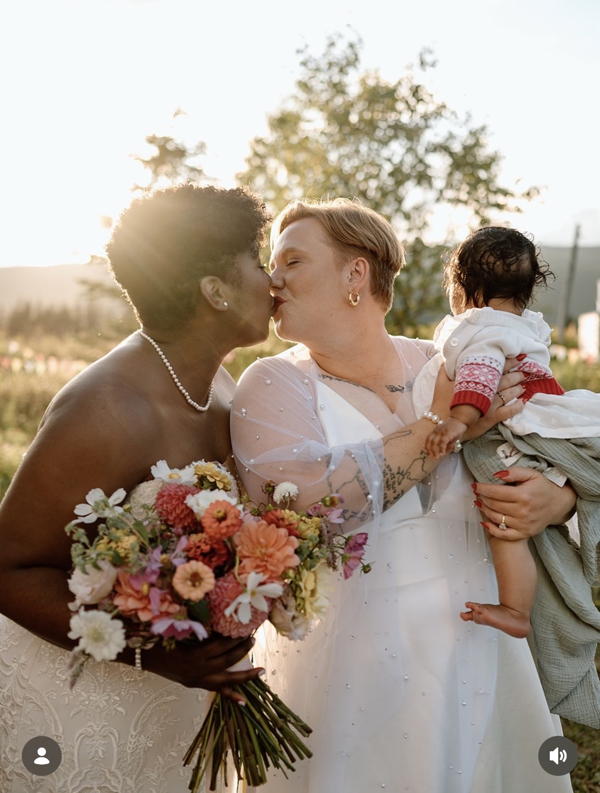
The wedding venue grew out of frustration—and love. When we were planning our own wedding, we struggled to find spaces that felt genuinely inclusive. We wanted accessibility. We wanted something that wasn’t alcohol-forward. We wanted a place that welcomed all of who we were: queer, interracial, disabled, tender, real.
So we decided to build what we couldn’t find. We’re both celebratory events people who are helpless romantics and really love hosting weddings.
What began as a vague dream of a backyard wedding slowly transformed into a full-scale venue offering ceremonies for everything from intimate gatherings to larger celebrations. The goal isn’t luxury—it’s care. Care for different bodies, different identities, different ways of loving.
We don’t frame our work around the institution of marriage so much as the celebrations of love. I believe, wholeheartedly, in honoring and bringing people together.
There’s something powerful about raising a queer family in a rural place. We didn’t come to Cape Breton just for affordability. We came for belonging. And we found it.
What has becoming parents taught you about support, care, and community?
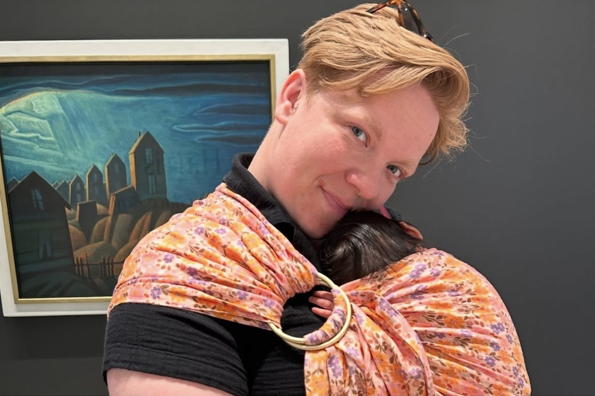
Life on the farm isn’t just about land and business—it’s about family. Adding Ellis to the mix has reshaped everything: the rhythms of work, the meaning of rest, and the stakes of what we’re building. I used to think I was tired, but now I know what that actually means, but adding Ellis to our family has been a dream come true.
One thing Ellis has taught us—maybe more through the experience of becoming parents than anything else—is the importance of having and giving support to each other. Becoming parents has taught us new ways to create reciprocity in our relationships, especially with some of our parent friends.
Babies require a lot of care and constant attention. It takes real stamina to care for them. I think the stamina you build as a parent can be transferable to other areas of caretaking—like caring for community and friendships.
What advice would you give about self-work, business-building, and starting a family?
If I could shift the timeline of my life a bit, I think it would have been easier to have our business more established before having a kid. It takes a few years for a business to become profitable—where you’re actually getting money out of it—and in those first few years, you’re basically volunteering for your own business.
One of the reasons we wanted to be self-employed is for flexibility—to be around our kids and more present in their lives. I do think that will work out in the long run. But right now, it feels like a lot of work in every direction. Maybe business never really gets “easy,” but hopefully it eventually becomes more financially sustainable.
We haven’t paid ourselves from the sauna business yet—that’s about a year and a half of unpaid work. From the wedding business, we’ve only paid ourselves a couple thousand dollars over about three years. Starting a business and having a baby at the same time is a lot of work. I don’t regret it, but if my timeline had been more flexible, I might have tried not to do both at once.
Especially with a newborn, being able to focus mostly on caring for them is such a gift. We weren’t able to fully give ourselves that gift because of how many other commitments we had. I didn’t really see it that way at the time, but looking back, I do.
That said, it’s definitely not impossible. And eventually, when we’re able to work for ourselves full-time, the flexibility to be around our kids more is one of the big pluses of self-work.
What is a recent moment that felt meaningful in terms of community?
Recently, at a sauna session, there was an older woman who said out loud, “I’ve never been in a cold plunge, and it’s on my bucket list. I’m going in today.” Later in the session, she actually did it—and everyone cheered for her.
It was this really beautiful moment of community that stuck with me and made me tear up. Those are the kinds of spaces and opportunity for connection that we want to create—and also the kinds of spaces we want to be part of. Seeing everyone cheer her on made me feel like we had really achieved that.
In my opinion, Cape Breton feels like Vancouver Island did in the 90s in that there is energy and things happening; people know each other, and still take care of their neighbours, and where working people can still get by. My parents were blue collar working class people…and this is what made me fall in love with Cape Breton. I really really really love it here.
This is not just a venue, or a flower farm, or a sauna in winter. It is a living ecosystem of queerness, inclusion, and joy. And it’s only just beginning. What they’re growing here is not just flowers. It’s a life.
Della Fougère resides in Cape Breton with her cat, Snoopy